The River Niger flows through my village in Delta State, from its source in far away Guinea, very close to my grandma`s miniature four bedroom cottage in Ashaka.
I have no recollection of my first visit to Ashaka or of my grandpa who died soon after. I was only a few months old. My mother recounts the circumstances surrounding his death in one simple sentence ''It was after he carried you that he died''. I imagine him picking me up, handing me over to my mother and immediately dropping down dead. Making me the world`s youngest murder suspect.
I was 4 years old on our next visit. One morning, we were roused by Grandma`s shrill voice. She was in an argument with my mother, and as they were speaking in our local dialect, which we did not understand, we had no idea what the ruckus was about or how it was to affect us. Grandma, having won, immediately shepherded my older brother, my younger sister and myself out of the house. Clad only in matching multi-coloured cotton towels tied tightly around our fragile waists, we went gleefully past the guava tree with the yellowing fruits in front of a mud house, by the fenced compound with the barking dog, down the narrow steep decline bordered by cocoa yam plants. A short while later, we arrived at our destination, the river.
At first glance it looked like a huge grayish-black blanket, motionless and soft, but as we got closer we noticed that it was moving swiftly in one direction. It was so wide that it was impossible to see the huge trees which marked the beginning of the forest on the other side. We were excited and anxious at the same time as it was our first time near a large body of water.
It was not surprising to see a large number of people as the river provided an abundant source of water in a town with no other alternative. Almost everything was done here. It was alive with voices talking, singing, yelling, crying and birds cawing in the distance. It smelled strongly of fish, wet grass and the sweet fragrance of Lux soap and Omo detergent. We trailed closely behind Grandma. She called out a greeting to a thin woman who was singing loudly as she washed a heap of clothes by the river bank, waved at an old lady who seemed to be standing right in the middle of the dark water. We stopped to chat with a relative, who patted our heads and pulled our cheeks fondly in greeting. Beside her was a young girl scrubbing a big black pot which was crying for freedom. We walked along the river bank and stopped when we finally spotted a free spot beside a large tree stump.
We watched in awe as a group of naked kids, some as tiny as we were, dived fearlessly from the top of a fallen tree at the edge of the river. In the distance, a canoe with two passengers was slowly fading into the horizon.
Grandma took off our towels, folded them neatly on the tree stump, asked my brother and I to wait as she picked up my sister and walked into the river. My sister screamed happily as she took her first dip and splashed around in the shallow end. But her excitement was short-lived as laughter was quickly replaced by tears as Grandma proceeded to give her a `proper` washing with the use of an awful smelling black soap and a rough-looking light brown sponge which is the fruit of plant native to West Africa. It is oblong and looks like a cucumber in shape, colour and size. It is left to dry while still hanging on the tree and only plucked when its colour changes to light brown, and generally used as a multi-purpose sponge.
My brother and I watched in horror as we awaited our turns. We were later to learn that Grandma had accused my mother of not bathing us thoroughly, of pampering our tough African skin with soft oyinbo sponges.
To be continued...

On one of my nightly rituals of browsing the internet after a busy day at work, I stumbled upon something called “The death Clock”. I opened the page and was greeted by the message “Welcome to the Death Clock, the internet's friendly reminder that life is slipping away... second by second”. I paused as I contemplated keying in my details in order to check the accuracy of the clock or to leave the site. What actually was running through my mind was why anyone would create such a webpage and how many people would even take it seriously. Out of curiousity, I keyed them in and the result was that I had 46 years to live, and my precious seconds were already ticking away, reducing as I stared at the screen! I simply laughed it off, but then I thought again about the fact that in reality, my life was actually ticking away.
If all this is true, then I should be glad to have 46 years left. In some years, I will be 40 years old, having already spent 42% of my life with 58% remaining, according to the clock. I began to have lots of silent monologues and I thought about a bucket list I had written in 2008. Unfortunately, I could not remember a quarter of what I wrote or where I kept the list. Life events over the years had over-taken the things I had planned to achieve, even though most of them were pleasure-driven and a few for charity.
But if I were to write a new bucket list I would split them equally, both charity and pleasure at 50% each. Here are a few items I would put, hoping to still have the energy and resources to achieve them in my remaining 46 years.
For charity, I would assist widows by placing them on a monthly payroll. I presently have just one widow. Adopt two kids, male and female to add to my biological one child that I hope to have. Volunteer at a crisis center or in a home for children with special needs. Recently, I spent some time at a home that had a child born with a hole in her throat. She was 9 months old but looked two weeks old. The hole made feeding difficult for her. The compassion and love I felt and still feel towards her has made me realize that I actually have the innate ability to take care of such children.
For pleasure, I would take a yearly solo trip to a country I have never visited as well as visit the five remaining continents (except Antarctica) on my list. Go Sky Diving as I love the rush of adrenaline. I am an adrenalin junky! Ride in a hot air balloon, climb one of the popular mountains... I hope am not deceiving myself on this one sha.
“The death clock” is pure fiction, but it does not rule out the overwhelming fact that death is inevitable. When or how we know not. While we are chasing the pleasures of life and working too hard in order to live a comfortable life, we must bear in mind that the clock is slowly ticking, therefore we should strive to achieve our dreams and leave an impact that would be felt long after we are gone.
The clock is ticking…

When Aunt Stella asked me to be her guest blogger for the week, I thought long and hard about what to write. I was a bit rusty because it had been a while since I wrote a piece for “pleasure”, after all, the hustle has turned professional! (he he) God de o. Well, I thought long and hard, came up with a few ideas, did not pen them down and lost them. Today is the day I am meant to submit the said post and I am only now flexing my literary muscles. Make I try.
Lately, I have noticed certain patterns. “All I see are patterns, (in an ominous voice), life patterns". I tag them the “Want Cycle” and here is what I mean. We all were once screaming little`uns in the arms of our mothers, as we grow up we begin to want and need various things. Usually, our prayers are answered and we bask in the euphoria until it wears off and we “upgrade” and want more. We go to school with the wish to graduate. We graduate, then we want a job. We get the job, then we want to get married. We get married, then we want kids. We get kids, then we want money to provide for them. In our later years, we upgrade to wanting enough money saved for retirement, wanting grandchildren, good health, etc. I bet on our death beds, we shall still have some outstanding wants.
Top of the list is the achievement of a dream. I am sick of hearing myself whine about my own shortcomings. All I hear around me are excuses; ”the situation is not yet perfect, somebody is holding me down, if only I had more money”, etc. Sound familiar? “I need a better environment” said my colleague the other day as we discussed a business opportunity which had practically fallen into his lap. Just the week before he had said “ I will retire at 40”.
Our excuses are fighting karate with our wants. It seems like only yesterday I moved to Abuja, in fact it will be a year in a fortnight. Apart from at work where I proffer innovative solutions (at least I’d like to think they are), save my employer some money by noticing details no one else does, and introduce money-making initiatives that increase the reach of the company, everything else has been one long stream of monotony. Most of my dreams and aspirations, my wants, are exactly where I left them a year ago. Time is simply flying folks and nothing can slow it down. Think about something you had always wanted to do, that is still where it was five years ago. Beneath the excuses is good ol` fear of failure. If you never try, you will never know!
Well, I have decided, ("Yet again", my conscience says to me in an ominous voice), that if I want something, I will get off my lazy behind and go for it simply because I am afraid of waking up one morning when I am gray haired with wobbly hips (hehe), to ask my grandchild ”where did the time go?”
So, I guess all I have been trying to say to you dear reader is to stop the excuses and go for that 'want". Want to start a food blog? Go for it starting today. Is it to own a business? Make the plan and go for it. Need to self-develop for better employment prospects? Make a savings plan and go for it. If Aliko Dangote had kept on pushing his wants till tomorrow like a lot of us, on hearing the name “Dangote”, surely we would be like “huh? Na name of dance?”.
Disclaimer: Nothing ominous about the ominous voices in this article :)

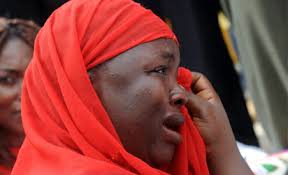
Last week, at Falomo Roundabout in Lagos, my car was almost hit by a dirty Danfo bus. As I expertly dodged the ochre-and-black stripes commuter bus, my gaze was drawn to a large group of photographs which surrounded the traffic circle like sentries. Numbering a hundred or more, they depicted a face with a red question mark at its centre, and a name at its base. The names were those of the almost 300 female students abducted by Boko Haram in April from a school in Chibok, Borno State.
Of course, I was not seeing them or the numerous reminders of the girls for the first time, but as days became weeks and weeks months, still no news of their return, thoughts of the girls were gradually upstaged by unavoidable daily wahala.
That rainy day, as I circumvented the pool of muddy water at the roundabout, I was consumed by a blend of several emotions least of which was disgust that I had given up hope.
I felt angry, as I recalled the events of these past months. Bewildered, that the military had 4 hours advance warning of the abductions yet failed to send reinforcements to protect the school. Stunned, at news that the girls had been sighted deep inside a nearby forest, but the military decided against infiltrating it “for fear of putting their lives at risk”. Nonsense! Astounded, as I waited in vain for news of the successful infiltration of the forest and the rescue of the girls. Alas, I daydreamed!
It has been 198 days, about 50 of the girls have escaped miraculously from their abductors. Stories of their ordeal ranging from being used as sex slaves to being killed for refusal to convert from Christianity to Islam have emerged.
Amid rumours of the rest of the girls having been taken outside the country and sold off, some believe that there were no abductions in the first place. Others believe that there were abductions, carried out by Boko Haram, at the behest of some Ogas at the top. The latter support their claim by predicting that the girls should be released before the elections in 2015. Presently, negotiations are on-going between the government and Boko Haram. The release of the girls in exchange for some of their captured members, is said to be in the offing.
There is an Igbo proverb which says “Ekwe onye nchiche n'aka, o'choba ibi-oma”. Meaning, “Offer a leper a handshake, and he will demand an embrace”. I am absolutely elated at news of the impending return of the girls, but also wary as Boko Haram`s insidious strategy becomes apparent.
Nevertheless, the Nigerian political class is in a quandary, no matter who wins the 2015 presidential elections; damned if the girls are released before the elections (culpability of the ruling PDP government?); damned if they are released after the elections by the new APC government (culpability of the APC?).
It has been 198 days. Bring back our girls.
The first time I visited the UK, I recalled the story of a Nigerian boy who upon setting his eyes upon the city of London for the first time, asked innocently, " Na the London be dis? Why dem no paint am? "
The first thing I noticed on the ride from the airport to my hostess' home, was the old buildings, some dating as far back as 2,000 years. Some of them looked old enough to topple over. The second was the fact that we were driving on the wrong side of the road. The third was the smell. London smelled of tea and stale cigarettes.
The first dish I sampled was an apple pie simply because I had had enough of salivating each time it was mentioned in a novel. It did not taste so bad, at least it was a better experience than the first time I had strawberries. As long as I could remember, I had always been fascinated by this fruit with such a vibrant shade of red, surely its taste would be heavenly, sweeter than honey I presumed. When I did finally have it I almost wept in utter disappointment. It wasn`t even sugary!
The weather, even in summer was unpredictable, scorching sun one minute, large rain droplets the next, as if she decides to be summer in the morning and spring in the afternoon. I quickly got used to holding a jacket just in case.
The underground rail system or the Tube was what impressed me most. Having the privilege of being the World`s first underground railway and dating as far back as 1863 when the first train was commissioned, the Tube boasts of 408 kilometres of track of which 55% of it is above ground. The shallowest depth below ground is 17 feet while the deepest is 221 feet. The network covers Greater London as well as some smaller regional towns and conveys an astonishing average of 2.7 million passengers daily.
On a typical day, a journey from Abbey Wood to Paddington, for instance, would cost about 11 Pounds, same journey by taxi could cost six times as much. Even though I fought back a claustrophobic feeling of being buried each time the train went underground. For me, this is no doubt the solution to the maddening traffic in Lagos.
A friend told me a story. One cold rainy morning as she commuted to work, the train she was in stopped all of a sudden and as the passengers craned their necks to peer outside the window, the driver announced that there had been a 'jumper' and that the tracks would have to be cleared before they could continue on their journey. I shivered involuntarily as an image of a man or a woman taking a leap of death in front of a train moving at 60mph, began to materialize in my head. I was stunned to discover that in the UK, jumping under a train accounts for around 3.5% of all suicides. Shuo!
I enjoyed riding in the red double-decker buses that looked almost too large for the narrow roads. I held my breath in fear each time they took a turn that brought them within inches of the cars on the opposite lane. One of my favourite pastimes was crowd watching and I enjoyed doing this on these rides. A tall teenage boy and a pink-haired girl explored each other`s mouths with their tongues, a young man in an Arsenal t-shirt spoke loudly in yoruba on his mobile phone, a freckled girl who looked no older than 15 years slowly rocked a sleeping baby in a stroller, a white old lady with rheumy, exhausted eyes stared at me suspiciously.
On a warm Friday night, some friends took me to a naija night club in East London which was no different from its counterparts in Lagos except that smoking in enclosed places like this had since been banned. Music blared from invincible speakers, scantily-clad girls in sky-high heels that they struggled to walk in swayed into the club, young men with roving eyes leaned against the huge bar which stood at the centre, three hefty bouncers tried to break up a fight between a group of girls. I quickly lost interest in their fake-Brazilian-hair-pulling cat fight as Ghanaian musician, Sarkodie`s hit song "you know say money no be problem" started and I hit the dance floor. I thought nothing could spoil my groove until they stopped selling alcohol at 2.00 am. Haba! When I was just warming up? Shortly after this the crowd began to thin out. I was disappointed but in retrospect, it was a brilliant idea to stop the sale of alcohol early enough in order to at least control, howbeit a little, the issue of drunk driving.
A day before my holiday ended and I returned to Lagos, we heard on the news that the police had discovered the body of a teenage boy in a field. They believed that the boy who had been missing for days may have been strangled, and this happened to be the second case in about three months. They warned that there might be a serial killer on the loose. Serial killer ke? I slept with one eye open that night and anxiously waited for dawn so I could head to the airport and then to the safety of my home in Lagos. I no fit shout.

Recently, American football star Adrian Peterson was indicted for whipping his 4 year old son with a tree branch, which he claimed was a method of disciplining the child. This got me thinking about how different the issue of discipline is here in Nigeria, how different it was when I was growing up.
My parents, especially my mother was a believer in the idiom "spare the rod and spoil the child". As a staunch advocate of the importance of bringing up well-behaved children, she never condoned any form of disobedience or bad behaviour, and had different methods of discipline depending on the severity of the act committed.
Minor offences like rudeness, not greeting an elder, or refusal to do a chore, could warrant punishments like a sharp pull to the ear or cheek, being asked to kneel in a corner, eyes closed and hands raised up. But major ones like lying or stealing would definitely warrant a flogging or worse a beating. We always preferred the former.
Floggings were administered on the palm of the hand and the instrument was a long, dark brown, sun-dried tree branch which was aptly called a 'water cane' because of its flexibility. This much dreaded weapon which made you scream loud enough to wake the neighbours, was kept in a corner of the living room where all could see. The sight of it was enough to make you think twice about committing any offense. Hand stretched out, palm facing up as the lashes are delivered in quick succession. Pulling your hand back reflexively so that the wicked cane misses its target would always result in some additional lashes. Fleeing was never an option as there was the risk of some hot lashes landing on your tender back instead. After what usually seems like a lifetime, the punishment is finally over, your palm feels as if a million soldier ants are drilling holes into it, you crawl up in a corner wailing like a wild animal till you are pacified by the same individual responsible for your tears. This would usually be followed by a lecture on why you were punished and then some sweets.
Beatings were a few quick slaps to the face, arms and upper back and they were reserved for the most grievous acts like lying or stealing. They usually played out this way, ''you hear your full name (pet names having long been forgotten) being called in a loud voice as your `crime' is discovered, you burst into tears and start running for the closest neighbour`s house to seek assylum. You get there and quickly 'report' yourself, usually to the mother of the house, editing the story as you go along, sugar-coating the parts where you committed the punishable act and getting her to take sides with you. After some hours she takes you home herself and pleads for mercy on your behalf''. This tactic worked but not all the time, sometimes the beating would commence as soon as the neighbour left or worse, late at night when you were already in bed thinking all had been forgiven and forgotten.
The worst kind of beating one could receive was the kind that came at the end of the school session, the one that had to do with your performance in school. God help you if your position failed to fall within first to fifth! It would be better for you to disown your parents and not return home. At least not that day. This was the only occasion where no neighbour pleaded for you, in fact involving them might be a big mistake especially if their own kids were olodos like yourself.
Some beatings just stick with you sha...
When I was 13 years old, something happened that made me suspect I was adopted. Unlike my younger sister by a year, Oby, I preferred to save my pocket money than spend it all on sweets. One sunny day we both had to attend the first birthday party of a neighbour`s son and true to type Oby had no presents to give the little boy. So I proudly presented my carefully wrapped present, with my name boldly written on it to the boy`s mother. On getting home we recounted the events of the day to my mother and as we got to the part where I presented my gift, she moved closer to me and the next thing I felt was a whoosh of hot air and a ringing in my left ear. My mum had just struck me across the face! I cried for hours and refused to eat as I struggled to understand why I had been struck. As the clock ticked and late afternoon turned into night, my stomach groaned in hunger, I waited until everyone had gone to bed before sneaking into the kitchen to eat my food which had since gone cold. Before curling up to sleep in the living room, I plotted my escape from home in search of my real mother as I believed I must have been adopted to be beaten for no apparent reason. The next day my mother sat me down and explained that she had struck me simply because as the older one I should have been more responsible by asking Oby in advance for a part of her pocket money to buy a gift for the boy, as we were aware of the party months before.
Fortunately, that was the last beating I ever received. For most of us, the beatings stopped as we grew older and wiser, but unfortunately this did not apply to everyone. For some, the beatings followed them well into the University.
One hot March afternoon, while we napped before heading out to the beach, the stillness of our female hostel in Delta State University, was shattered by the sound of a commotion and the shrill cries of someone in a lot of pain. On getting to one of the rooms from which emanated the noise, we were shocked to see a plump dark woman dressed in blue iro and buba, obviously not an undergrad, unleashing quick, loud slaps on a slim fair girl, obviously an undergrad. The scantily clad girl was crying loudly, trying to shield herself from the onslaught. We were later to learn that the woman was her mother, who decided to pay her a visit and exorcise some demons while at it, upon hearing that her once innocent little girl had now transformed into a runs girl who went around with married men.
I imagine this happening now, in America, the story would definitely be 'breaking news' on CNN.
It is hard to deny the importance of discipline, as it is a process of teaching a child what type of behaviour is acceptable or not. There are some who swear that the beatings they received as kids were largely responsible for them growing up to become child molesters and serial killers. To support this, studies have shown that spankings or beatings can increase the likelihood of a child developing mental health symptoms. On the other hand, there are others, including my humble self, who believe that the beatings they received played a major role in molding them into the fine citizens they have become.
That being said, I do not support beatings as a first choice, apart from the fact that they can shake the foundation of trust between a child and its parents, they teach children to lie to avoid detection and subsequently an ass whooping. Other alternatives like grounding a child for bad behaviour or rewarding them with treats for good behaviour should be foremost.
Joor what really is the best way to bring up a child?
Candies?

The rod?

A group of men dressed in space-suit-like outfits, cautiously throw a dead body into a grave, they pause only to toss in anything else they are wearing that came into contact with the deceased. There are no religious or traditional burial rites, no ceremony, no mourning, no family members, and no final goodbyes. It looks like a scene from the 1994 non-fiction thriller "The Hot Zone" by Richard Preston about viral hemorrhagic fevers particularly about ebolaviruses and marbugviruses.
This is a true picture of what is happening on a daily basis, in Guinea, Sierra-Leone and Liberia. It is the story of Ebola, a deadly viral disease that is slowing creeping across borders, and sneaking silently through checkpoints undetected.
Ebola Virus Disease (EVD) or Ebola is an infectious and generally fatal disease marked by fever and severe internal bleeding, spread through contact with infected body fluids by a filo virus (Ebola virus). There is no known cure.
According to the WHO, Ebola has killed over two thousand people and infected an estimated four thousand since the outbreak began in Guinea in December 2013. A figure which is growing at an alarming rate, and which both the WHO and the UN believe are vastly under-estimated. Ebola has now spread to Sierra-Leone, Liberia, Nigeria and most recently Senegal.
As I follow the news daily, I think about the victims, the ones under surveillance, those under quarantine, but most especially the dead. I read the interview of Dennis Akagha, the fiance of the first Nigerian Ebola victim, Justina Ejelonu. He recounted in chilling details her final days, the terrible conditions at the quarantine centre in Yaba, her slow and painful death, and his own miraculous recovery from the dreaded disease which he contracted while caring for her.
Patrick Sawyer, the index case from Liberia, was admitted at First Consultant Hospital on July 20th, the next day was Justina`s first day at work, Sawyer was her first patient. The 30 year old nurse had a lot to be excited about, her new job at this hospital, her forth coming wedding in October, her two months old pregnancy. She was carrying their first child. She succumbed to the disease which she had contracted from Sawyer three weeks later.
In a small village in far away Liberia, most of the houses have been abandoned, their doors padlocked and windows shuttered. The empty houses belonged to people who either died of Ebola or those who fled in terror, for fear of contracting the virus. Some of the residents abandoned the town in such a hurry that their clothes and floor mats have been left hanging on clotheslines.
Kazalee Johnson, a community worker, lost his 8-months-pregnant sister, his brother, niece and many, many others: too many to name."They died. They died," he said. "So many people died -- the houses on your right and even the houses on your left. They are all gone."
In another village, one of the local clinics had to be locked up after all the health care workers based there contracted the virus. Only one survived. Some kilometres away is the town of Barkedu, home to more than 8,000 people, which is now completely under quarantine, no one can go in, and no one can go out.
Epidemics are often graded by their RO, or reproductive number. RO 0 signifies that the disease cannot be passed from person to person. An RO less than 1 will die out quickly because there will be few secondary infections. Any RO above 1 connotes an expanding epidemic. A recent report showed a new calculation of the RO for this epidemic and it found that when the outbreak began in Guinea back then in 2013, its RO was 1.5, meaning each person infected one and a half other people. But by early July 2014, the RO in Sierra Leone was a hideous 2.53, so the epidemic was more than doubling in size with each round of transmission. Today in Liberia, the worse hit country so far, the virus is spreading so rapidly that no RO has been computed.
In fact, recent figures showed a surge in new cases in Liberia.The surge is as a result of more than 500 new cases recorded in just a week. WHO said that it expects thousands of new infections in Liberia in the coming weeks.
But there is hope.
Hope despite the fact that the sole major international responder, Doctors Without Borders pleaded for help many months ago and warned repeatedly that the virus was spreading out of control. It had to take the near death of two American doctors who got infected in Liberia, for the WHO to finally awaken from its slumber and declare the disease an epidemic. The disease which could have been easily nipped in the bud months ago has now spread to five African countries.
Hope in the growing number of survivors. A recen t study revealed that 45% of those infected recovered from it.
Hope as production of ZMapp, the `wonder' serum which is believed to have cured the two American doctors, is being expedited. A report released last week, showed the result of a test carried out on 18 healthy monkeys who had been injected with lethal doses of the virus. ZMapp healed all 18 of them.
Hope as human trials of an experimental vaccine began last week. So far no adverse reactions have been experienced by any of the healthy volunteers.
Hope as I dream of a day, not so far away, when I will offer without an iota of fear, the traditional Catholic firm handshake as a sign of peace to the Yoruba man in the white agbada sitting next to me at the 6.30 am mass, and a small peck on each cheek to the thin French lady on the other side. Just like we used to do.
A day where mourners will once again escort their dead to the burial grounds.

 Posts
Posts


