Christmas Day smelled of jollof rice and fried chicken. It was and still is the happiest time of my life. Most of my childhood Christmases were spent in the bustling city of Benin. With my mother far away in Abuja, my father at work six days of the week and my older siblings practically ignoring me, there was ample time to mix with the area children, and soon enough I became one of them.
For my playmates and me, the festive season would begin with cultural dance performances organized by our humble selves. Dressed in white cotton cloths tied tightly around our flat chests, wrists and ankles adorned with beads which we had strung ourselves, white dots from melted white chalks placed all over our arms and legs. We would go from house to house singing and dancing to bini songs as the spectators cheered and "sprayed" us with money, which would later be spent on ulokah, knock-outs and bisco lights.
Other days were spent playing football in the streets with the boys, climbing fruits trees, playing emababa and eyeing the bright yellow mango fruits which were visible from the top of the 10-foot fence in our neighbour, Dr Osula`s house. Nobody lived in the house, the only presence we saw was that of the caretaker, an elderly man who would come to inspect it from time to time. One sunny afternoon, we finally succumbed to the temptation. The older boys led the way, and we followed them in climbing the tall wrought-iron gate at the entrance, using the spaces in between as a foot-hold. Finally, we were all in. The first thing that hit us as we moved further away from the gate was the silence, we could barely hear the sound of passing cars outside. Facing us was a huge unpainted duplex and a swimming pool with no water in it. The ground was littered with dry leaves and rotten fruits from the mango, orange, soursop, cashew and pawpaw trees which stood close to the tall fence. The air was ripe with the aroma of these sweet smelling fruits and we wasted no time descending on them. Some we ate on the spot, others we placed in black polythene bags which we had brought with us. We were finally roused out of our fruits-induced euphoria by the sound of the gates opening. We bolted wildly towards the back of the compound, quickly forgetting our bags of loot. We must have made some noise because the next thing we heard was a man`s voice shouting “A re vba?” (meaning “who goes there?") We hid behind a brown water tank with hearts racing wildly, praying for a miracle. To our utter dismay, we heard footsteps approaching. To this day, I don`t remember moving, but all of a sudden I found myself running through the wide open gates, following closely behind the others, my heart in my mouth.
However, the season would begin in earnest for us the day we were presented with beautiful dresses in our favourite colours and shiny court shoes with matching clutch bags. Other colours but our preferred were strictly unacceptable. As soon as we were done admiring them we would dash to our friends` houses to check out theirs. The only thing which could dampen one`s spirit during this period was finding out on Christmas day that one had the same dress as one or two other girls. Even worst was when they were not in one`s clique.
On Christmas Eve, on our way to church for midnight mass, we would light up our knock-outs and toss them close to people walking along the road. We would wait impatiently for midnight and the moment the Priest said “Merry Christmas”, we would dash out of the church, light up the biggest knock-out in our collections, toss it as far away as possible and wait for the deafening bang. Some kids went as far as tossing theirs inside the church. What we did the rest of the night is still a blur.
The aroma of jollof rice was what woke us in the morning. We would bathe hurriedly, put on our “Christmas clothes” and dig into steaming bowls of rice and chicken (the usual breakfast of bread and eggs was out of the question), then run to church. The rest of the day would be spent visiting as many close family & friends as possible, stuffing ourselves with all kinds of food and drinks and praying that at the end our visit that our host would "dash" us some money.
As dusk approached, marking the end our favourite day, we would head home and shoot the rest of our knock-outs late into the night, and wish for the day to begin all over again.

Fall of 2007, at 3:25 pm, on a gloomy day, a beautiful, black girl in a pink woollen dress and a coffee brown sweater arrives at the busy Victoria Station from Brighton. As she awaits an interchange to Birmingham she discovers that she has lost her money. Confused, stranded without any money except a fiver, she is neither able to return to Brighton nor proceed on her journey.
“I am just going to ask a couple of strangers for some money and catch the next train” she says to herself.
To her utter dismay, no one stops to listen, they walk briskly past. She breaks down in tears. Moments later, she is calm enough to walk slowly to an ATM machine beside a coffee shop, even though she knows it, she still goes ahead to slot her card in, hoping for a miracle. Not a penny in her account. No units on her mobile phone to call a friend, no money in her account, her last hundred bucks misplaced. She wonders briefly if she is jinxed. As she stands there, a man walks up to her and asks for some change to get a cuppa.
“Seriously?” She shakes her head in disbelief as she takes a closer look at him, he was very well-dressed for a beggar.
Short and powerfully built, he wore a thick black knee-length coat over a bright green shirt and grey pants. We call them Corporate Beggars in Naija! Was he seriously asking for some coins? This dude doesn’t even realize I am stranded, but what the heck a fiver won’t even take me to the next street. Without a word, she heads to the coffee shop to get a cup of cappuccino. She hands it over to him silently. He thanks her as his face lights up.
“You should get a cup for yourself”. He says to her as he takes a sip.
“I cannot afford another, 20 pence is all I have left”. She responds with a shrug.
“Unbelievable! No one gives me anything you know, all they do is take. I am impressed that you went all-out to get me cappuccino when all I wanted was 50 pence more to get some coffee. Thank you!”
“5 bucks wouldn’t do me any good so why hold on to it?”
“To be honest, I saw you weeping moments ago and my heart melted, so I decided that I’d come over and make a pretty girl smile”. He says with a wink.
She looks at him with a mixture of curiousity and disgust. Disgust that having seen her weeping, he was now going to take advantage of her situation.
“My train’s already at the platform, I have to leave now but I must see you again beautiful”. He says as he grabs her hand and gives it a quick wet kiss.
“I was going to get myself a birthday gift but heaven’s already sent me one. So, here!”
He places something rolled and bound in her palm, then quickly scribbles something on the Stephen King novel she is holding and runs off.
She opens her palm and her eyes widens as she takes in the rolled 20 Pounds notes, about twenty of them. Her face breaks into a wide smile as she cranes her neck to catch a glimpse of him, but he is long gone. She opens the novel to see he had written a telephone number. Her heart starts to beat fast, a lot of questions running through her mind. Could he be a drug lord? A pimp? A 419 maybe?
She couldn’t be bothered as she heads to the kiosk to purchase her ticket. O boy, did it feel like Christmas in September!
Generosity is like a well, from which one always draws water because it never runs dry. Giving is like sowing a seed which becomes a tree, and which in turn produces thousands of other seeds. Some people say “I don’t have”. Well, they just never have! Remember your treasures will not accompany you to the grave, we all return to our maker as naked as we came.
Give to someone today, no matter how small and you may have filled a void with just one little act of kindness.
PS:The gorgeous stranger later becomes a world famous footballer. Can you guess who?


The River Niger flows through my village in Delta State, from its source in far away Guinea, very close to my grandma`s miniature four bedroom cottage in Ashaka.
I have no recollection of my first visit to Ashaka or of my grandpa who died soon after. I was only a few months old. My mother recounts the circumstances surrounding his death in one simple sentence ''It was after he carried you that he died''. I imagine him picking me up, handing me over to my mother and immediately dropping down dead. Making me the world`s youngest murder suspect.
I was 4 years old on our next visit. One morning, we were roused by Grandma`s shrill voice. She was in an argument with my mother, and as they were speaking in our local dialect, which we did not understand, we had no idea what the ruckus was about or how it was to affect us. Grandma, having won, immediately shepherded my older brother, my younger sister and myself out of the house. Clad only in matching multi-coloured cotton towels tied tightly around our fragile waists, we went gleefully past the guava tree with the yellowing fruits in front of a mud house, by the fenced compound with the barking dog, down the narrow steep decline bordered by cocoa yam plants. A short while later, we arrived at our destination, the river.
At first glance it looked like a huge grayish-black blanket, motionless and soft, but as we got closer we noticed that it was moving swiftly in one direction. It was so wide that it was impossible to see the huge trees which marked the beginning of the forest on the other side. We were excited and anxious at the same time as it was our first time near a large body of water.
It was not surprising to see a large number of people as the river provided an abundant source of water in a town with no other alternative. Almost everything was done here. It was alive with voices talking, singing, yelling, crying and birds cawing in the distance. It smelled strongly of fish, wet grass and the sweet fragrance of Lux soap and Omo detergent. We trailed closely behind Grandma. She called out a greeting to a thin woman who was singing loudly as she washed a heap of clothes by the river bank, waved at an old lady who seemed to be standing right in the middle of the dark water. We stopped to chat with a relative, who patted our heads and pulled our cheeks fondly in greeting. Beside her was a young girl scrubbing a big black pot which was crying for freedom. We walked along the river bank and stopped when we finally spotted a free spot beside a large tree stump.
We watched in awe as a group of naked kids, some as tiny as we were, dived fearlessly from the top of a fallen tree at the edge of the river. In the distance, a canoe with two passengers was slowly fading into the horizon.
Grandma took off our towels, folded them neatly on the tree stump, asked my brother and I to wait as she picked up my sister and walked into the river. My sister screamed happily as she took her first dip and splashed around in the shallow end. But her excitement was short-lived as laughter was quickly replaced by tears as Grandma proceeded to give her a `proper` washing with the use of an awful smelling black soap and a rough-looking light brown sponge which is the fruit of plant native to West Africa. It is oblong and looks like a cucumber in shape, colour and size. It is left to dry while still hanging on the tree and only plucked when its colour changes to light brown, and generally used as a multi-purpose sponge.
My brother and I watched in horror as we awaited our turns. We were later to learn that Grandma had accused my mother of not bathing us thoroughly, of pampering our tough African skin with soft oyinbo sponges.
To be continued...

On one of my nightly rituals of browsing the internet after a busy day at work, I stumbled upon something called “The death Clock”. I opened the page and was greeted by the message “Welcome to the Death Clock, the internet's friendly reminder that life is slipping away... second by second”. I paused as I contemplated keying in my details in order to check the accuracy of the clock or to leave the site. What actually was running through my mind was why anyone would create such a webpage and how many people would even take it seriously. Out of curiousity, I keyed them in and the result was that I had 46 years to live, and my precious seconds were already ticking away, reducing as I stared at the screen! I simply laughed it off, but then I thought again about the fact that in reality, my life was actually ticking away.
If all this is true, then I should be glad to have 46 years left. In some years, I will be 40 years old, having already spent 42% of my life with 58% remaining, according to the clock. I began to have lots of silent monologues and I thought about a bucket list I had written in 2008. Unfortunately, I could not remember a quarter of what I wrote or where I kept the list. Life events over the years had over-taken the things I had planned to achieve, even though most of them were pleasure-driven and a few for charity.
But if I were to write a new bucket list I would split them equally, both charity and pleasure at 50% each. Here are a few items I would put, hoping to still have the energy and resources to achieve them in my remaining 46 years.
For charity, I would assist widows by placing them on a monthly payroll. I presently have just one widow. Adopt two kids, male and female to add to my biological one child that I hope to have. Volunteer at a crisis center or in a home for children with special needs. Recently, I spent some time at a home that had a child born with a hole in her throat. She was 9 months old but looked two weeks old. The hole made feeding difficult for her. The compassion and love I felt and still feel towards her has made me realize that I actually have the innate ability to take care of such children.
For pleasure, I would take a yearly solo trip to a country I have never visited as well as visit the five remaining continents (except Antarctica) on my list. Go Sky Diving as I love the rush of adrenaline. I am an adrenalin junky! Ride in a hot air balloon, climb one of the popular mountains... I hope am not deceiving myself on this one sha.
“The death clock” is pure fiction, but it does not rule out the overwhelming fact that death is inevitable. When or how we know not. While we are chasing the pleasures of life and working too hard in order to live a comfortable life, we must bear in mind that the clock is slowly ticking, therefore we should strive to achieve our dreams and leave an impact that would be felt long after we are gone.
The clock is ticking…

When Aunt Stella asked me to be her guest blogger for the week, I thought long and hard about what to write. I was a bit rusty because it had been a while since I wrote a piece for “pleasure”, after all, the hustle has turned professional! (he he) God de o. Well, I thought long and hard, came up with a few ideas, did not pen them down and lost them. Today is the day I am meant to submit the said post and I am only now flexing my literary muscles. Make I try.
Lately, I have noticed certain patterns. “All I see are patterns, (in an ominous voice), life patterns". I tag them the “Want Cycle” and here is what I mean. We all were once screaming little`uns in the arms of our mothers, as we grow up we begin to want and need various things. Usually, our prayers are answered and we bask in the euphoria until it wears off and we “upgrade” and want more. We go to school with the wish to graduate. We graduate, then we want a job. We get the job, then we want to get married. We get married, then we want kids. We get kids, then we want money to provide for them. In our later years, we upgrade to wanting enough money saved for retirement, wanting grandchildren, good health, etc. I bet on our death beds, we shall still have some outstanding wants.
Top of the list is the achievement of a dream. I am sick of hearing myself whine about my own shortcomings. All I hear around me are excuses; ”the situation is not yet perfect, somebody is holding me down, if only I had more money”, etc. Sound familiar? “I need a better environment” said my colleague the other day as we discussed a business opportunity which had practically fallen into his lap. Just the week before he had said “ I will retire at 40”.
Our excuses are fighting karate with our wants. It seems like only yesterday I moved to Abuja, in fact it will be a year in a fortnight. Apart from at work where I proffer innovative solutions (at least I’d like to think they are), save my employer some money by noticing details no one else does, and introduce money-making initiatives that increase the reach of the company, everything else has been one long stream of monotony. Most of my dreams and aspirations, my wants, are exactly where I left them a year ago. Time is simply flying folks and nothing can slow it down. Think about something you had always wanted to do, that is still where it was five years ago. Beneath the excuses is good ol` fear of failure. If you never try, you will never know!
Well, I have decided, ("Yet again", my conscience says to me in an ominous voice), that if I want something, I will get off my lazy behind and go for it simply because I am afraid of waking up one morning when I am gray haired with wobbly hips (hehe), to ask my grandchild ”where did the time go?”
So, I guess all I have been trying to say to you dear reader is to stop the excuses and go for that 'want". Want to start a food blog? Go for it starting today. Is it to own a business? Make the plan and go for it. Need to self-develop for better employment prospects? Make a savings plan and go for it. If Aliko Dangote had kept on pushing his wants till tomorrow like a lot of us, on hearing the name “Dangote”, surely we would be like “huh? Na name of dance?”.
Disclaimer: Nothing ominous about the ominous voices in this article :)

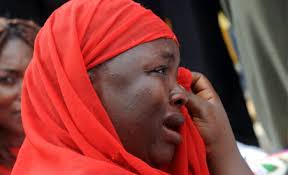
Last week, at Falomo Roundabout in Lagos, my car was almost hit by a dirty Danfo bus. As I expertly dodged the ochre-and-black stripes commuter bus, my gaze was drawn to a large group of photographs which surrounded the traffic circle like sentries. Numbering a hundred or more, they depicted a face with a red question mark at its centre, and a name at its base. The names were those of the almost 300 female students abducted by Boko Haram in April from a school in Chibok, Borno State.
Of course, I was not seeing them or the numerous reminders of the girls for the first time, but as days became weeks and weeks months, still no news of their return, thoughts of the girls were gradually upstaged by unavoidable daily wahala.
That rainy day, as I circumvented the pool of muddy water at the roundabout, I was consumed by a blend of several emotions least of which was disgust that I had given up hope.
I felt angry, as I recalled the events of these past months. Bewildered, that the military had 4 hours advance warning of the abductions yet failed to send reinforcements to protect the school. Stunned, at news that the girls had been sighted deep inside a nearby forest, but the military decided against infiltrating it “for fear of putting their lives at risk”. Nonsense! Astounded, as I waited in vain for news of the successful infiltration of the forest and the rescue of the girls. Alas, I daydreamed!
It has been 198 days, about 50 of the girls have escaped miraculously from their abductors. Stories of their ordeal ranging from being used as sex slaves to being killed for refusal to convert from Christianity to Islam have emerged.
Amid rumours of the rest of the girls having been taken outside the country and sold off, some believe that there were no abductions in the first place. Others believe that there were abductions, carried out by Boko Haram, at the behest of some Ogas at the top. The latter support their claim by predicting that the girls should be released before the elections in 2015. Presently, negotiations are on-going between the government and Boko Haram. The release of the girls in exchange for some of their captured members, is said to be in the offing.
There is an Igbo proverb which says “Ekwe onye nchiche n'aka, o'choba ibi-oma”. Meaning, “Offer a leper a handshake, and he will demand an embrace”. I am absolutely elated at news of the impending return of the girls, but also wary as Boko Haram`s insidious strategy becomes apparent.
Nevertheless, the Nigerian political class is in a quandary, no matter who wins the 2015 presidential elections; damned if the girls are released before the elections (culpability of the ruling PDP government?); damned if they are released after the elections by the new APC government (culpability of the APC?).
It has been 198 days. Bring back our girls.
The first time I visited the UK, I recalled the story of a Nigerian boy who upon setting his eyes upon the city of London for the first time, asked innocently, " Na the London be dis? Why dem no paint am? "
The first thing I noticed on the ride from the airport to my hostess' home, was the old buildings, some dating as far back as 2,000 years. Some of them looked old enough to topple over. The second was the fact that we were driving on the wrong side of the road. The third was the smell. London smelled of tea and stale cigarettes.
The first dish I sampled was an apple pie simply because I had had enough of salivating each time it was mentioned in a novel. It did not taste so bad, at least it was a better experience than the first time I had strawberries. As long as I could remember, I had always been fascinated by this fruit with such a vibrant shade of red, surely its taste would be heavenly, sweeter than honey I presumed. When I did finally have it I almost wept in utter disappointment. It wasn`t even sugary!
The weather, even in summer was unpredictable, scorching sun one minute, large rain droplets the next, as if she decides to be summer in the morning and spring in the afternoon. I quickly got used to holding a jacket just in case.
The underground rail system or the Tube was what impressed me most. Having the privilege of being the World`s first underground railway and dating as far back as 1863 when the first train was commissioned, the Tube boasts of 408 kilometres of track of which 55% of it is above ground. The shallowest depth below ground is 17 feet while the deepest is 221 feet. The network covers Greater London as well as some smaller regional towns and conveys an astonishing average of 2.7 million passengers daily.
On a typical day, a journey from Abbey Wood to Paddington, for instance, would cost about 11 Pounds, same journey by taxi could cost six times as much. Even though I fought back a claustrophobic feeling of being buried each time the train went underground. For me, this is no doubt the solution to the maddening traffic in Lagos.
A friend told me a story. One cold rainy morning as she commuted to work, the train she was in stopped all of a sudden and as the passengers craned their necks to peer outside the window, the driver announced that there had been a 'jumper' and that the tracks would have to be cleared before they could continue on their journey. I shivered involuntarily as an image of a man or a woman taking a leap of death in front of a train moving at 60mph, began to materialize in my head. I was stunned to discover that in the UK, jumping under a train accounts for around 3.5% of all suicides. Shuo!
I enjoyed riding in the red double-decker buses that looked almost too large for the narrow roads. I held my breath in fear each time they took a turn that brought them within inches of the cars on the opposite lane. One of my favourite pastimes was crowd watching and I enjoyed doing this on these rides. A tall teenage boy and a pink-haired girl explored each other`s mouths with their tongues, a young man in an Arsenal t-shirt spoke loudly in yoruba on his mobile phone, a freckled girl who looked no older than 15 years slowly rocked a sleeping baby in a stroller, a white old lady with rheumy, exhausted eyes stared at me suspiciously.
On a warm Friday night, some friends took me to a naija night club in East London which was no different from its counterparts in Lagos except that smoking in enclosed places like this had since been banned. Music blared from invincible speakers, scantily-clad girls in sky-high heels that they struggled to walk in swayed into the club, young men with roving eyes leaned against the huge bar which stood at the centre, three hefty bouncers tried to break up a fight between a group of girls. I quickly lost interest in their fake-Brazilian-hair-pulling cat fight as Ghanaian musician, Sarkodie`s hit song "you know say money no be problem" started and I hit the dance floor. I thought nothing could spoil my groove until they stopped selling alcohol at 2.00 am. Haba! When I was just warming up? Shortly after this the crowd began to thin out. I was disappointed but in retrospect, it was a brilliant idea to stop the sale of alcohol early enough in order to at least control, howbeit a little, the issue of drunk driving.
A day before my holiday ended and I returned to Lagos, we heard on the news that the police had discovered the body of a teenage boy in a field. They believed that the boy who had been missing for days may have been strangled, and this happened to be the second case in about three months. They warned that there might be a serial killer on the loose. Serial killer ke? I slept with one eye open that night and anxiously waited for dawn so I could head to the airport and then to the safety of my home in Lagos. I no fit shout.


 Posts


