Happy Mothers` Day Everyone!
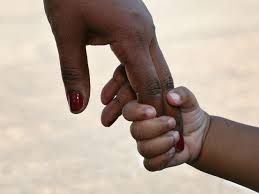
Few of us today had our own mothers as professional role models or mentors simply because just a select few mothers had high-ranking jobs in the big organizations where we aspired to be. However, they were our mentors in various aspects and in fact in a recent poll I carried out amongst 30 of my colleagues and friends, everyone unanimously agreed that mothers provide the most vital tools every child requires in preparation for the challenges of adulthood. From being able to see through that sweet-talking suitor to providing support and much-needed advise in dealing with your difficult boss, mothers come well equipped.
Mentoring entails providing support and feedback with the aim of clarifying career direction, increasing the ability to perform, developing skills & knowledge and helping to avoid making costly mistakes. Mentoring by a mother has the added advantage of further strengthening an already existing mother-child connection and also offers the child the unique opportunity of asking sensitive questions that they wouldn’t feel comfortable asking anyone else. Mothers are more likely than fathers to serve as mentors to their young adult children. Women in general are more likely than men to mentor anyone, male or female according to a 2010 study.
Naturally, children look up to their parents, taking on the role of a mentor or in other words, a “supporter” to your own child should therefore not be difficult. However, these relationships can be both challenging and rewarding, but also fraught with tension, as children strive for independence and mothers walk the line between giving needed guidance and meddling too much. The key is to avoid imposing your own views and to never pressure your child, bearing in mind that children can think for themselves. For instance, it is better to say “If I were in this situation, I might do this” than to outrightly tell them exactly what to do and how to do it. Mentoring is not about accepting the mentor`s views, it is about the mentee`s ability to make wise decisions using the latter`s views and opinions as a guide.
One challenge for a mother is separating “Am I here to give you hard, cold advice that may open doors for you or am I here for you because you just need a hug today?” Sustaining the relation will mean drawing a line where tough but solid advice stops and emotional support starts. The result is that the mentee may find the mentor too rigid, and may secretly seek a softer “motherly” method. Whereas, having an outsider as mentor may well produce better results even though their style may be more rigid than the mother`s.
Another challenge is that the mentee may perceive the programme as being too tasking or worse as punishment rather than an opportunity. The solution is not to force participation but to gradually integrate them into it. This can be best achieved when assisting the child with school work. Instead of doing it for them, teach them how to do it and when they don`t get it right, show them a better way of doing it next time.
Some people on the other hand would rather get someone they admire to mentor their kids. Relationships between mentors and the parents of children being mentored could become sensitive. Though they sometimes feel jealous of or threatened by mentors, parents need to understand that mentors are not trying to take over their roles. Mentors, in turn, need to respect and support parents' rules and concerns for the children while building their own relationships.
Behind every productive life, there is mentoring, no matter how dysfunctional. Parents have been given that gift. We need to use it wisely. I for one look forward to mentoring my children, I consider it an honour, a privilege and an obligation. There could be nothing more rewarding than supporting them and having them look up to me for guidance.
Several days after Ngozi`s death, I received a call from a friend who lives in Port-Harcourt. He had called to express his sympathies, but by the end of our lengthy conversation, our roles got switched. I became the sympathizer.
One sunny afternoon just the week before, his aged parents had left their hometown to pay a visit to the Governor of the state. Half way to their destination, they received word that the meeting had been rescheduled. On getting back to the village, they decided to attend a meeting at the church before heading home. Several kilometers to their destination, on a long stretch of road marked with pot-holes, their car was suddenly blocked by a black SUV which seemed to appear out of nowhere. Their driver of eight years narrowly missed running into it. He expertly swerved the car to the left and into a ditch filled with debris. Four able-bodied men dressed in outfits similar to police uniforms sprang out and ordered the couple out at gun point. One of them struck the frightened woman on the face to rouse her out of her shock-induced unresponsiveness as the others ordered the driver to run into the nearby bushes. He then proceeded to drag her alongside her husband out of the car and into the back seat of the dusty SUV. The four men got in after them and the car sped off in the opposite direction leaving behind a trail of reddish brown dust. Several minutes later, the terrified driver came out of the bushes and drove straight to the church to inform the parishioners who in turn alerted the police.
Two days later, the anxious family received a call from a man claiming responsibility for the abductions. His demand was the sum of N15 Million in exchange for their release. They immediately relayed this information to the police who advised them to comply with the demands.
Four days after, still no closer to gathering such a large sum of money, the abductors called to inform them that the woman was feeling poorly and that being diabetic needed her medication. Also, that out of the goodness of their hearts, they had reduced the sum to N13 Million. The desperate family pleaded with them that all they could come up with was N1.8 Million. The two sides haggled till the sum of N6 Million was agreed upon. The family informed close friends and relations and at the end of the day was able to come up with the agreed sum.
The next morning, the abductors called and put the father on the line. In a shaky voice, he pleaded for immediate rescue of himself and his wife. The family wasted no time in getting a relation to act as negotiator to convey the money to a pre-arranged location. Inside the bag containing the money and the medication, they put a mobile phone which had a tracking device. The police, confident that with the help of the tracker, the money would lead straight to the abductors, prepared to swing into action. Several hours later, the family received a call that the abductors had the money but had not released the couple, instead they had shot the negotiator on the leg.
Early the next day, the abductors called again but this time to inform them that the woman had died. They claimed that she had given up the ghost just before the arrival of her medication. They had proceeded to bury her body. They demanded for an additional N7 Million for the immediate release of the man. The distraught family decided not to comply but to leave everything to fate. The man was released the very next day. The police informed the family several days later that they had traced the phone to a certain location. Unfortunately, the abductors were long gone.
Some aspects of this story did not add up. First and foremost, the abductors were dressed in police uniforms or in outfits closely resembling police uniforms. Could they have been actual police men? Strange was the fact that even with a tracking device the police failed to apprehend the abductors the moment the money was handed over. One would have expected them to trail the negotiator to the location where the exchange was to take place. Curious that the abductors left the mobile phone behind. Ever heard of a monkey rejecting a banana? Could they have been aware that it contained a tracker?
Fortunately, the man made it out alive even if the whereabouts of the woman are still unknown. A not-so-happy ending to a nightmare which is made worse by the fact that the family is still to this day searching for the body of the woman but at the same time praying for a miracle that she is still alive.
There I was thinking that my situation was bad until I heard my friend`s story.

I received news of her death as I sat cross-legged on my bright orange sofa after a typical crazy Monday at the office. My gaze was fixed squarely on the TV screen as Chef Ramsey screamed obscenities at the contestants of Hell`s Kitchen when the phone rang. Still I sat, sightless eyes glued to the screen as Arsenal beat Man-U 2-1. On a good day, this would have meant having a glass of my favourite bubbly in celebration, but not today. I still don`t recall turning off the TV or the lights, I was numb, zombie-like afterwards and also for the next few days. The tears would come a week later as I remembered Ngozi, my eldest sister.
There were two of them, the Good and the Bad and Ngozi was the good big sister. The Bad, her junior by three years, took absolute pleasure in reminding us that we were ‘small rats’ hence did not deserve a minute of her precious time. She spent her free time reading the popular Mills & Boons love stories which she kept far away from our prying innocent eyes. She would wrap the front covers with an old newspaper as the pictures depicted on them were usually of a man and a woman either kissing or in an embrace. One particularly hot afternoon when NEPA had struck again, I discovered a copy hidden under a pillow. I spent a while just staring at the cover before hurriedly flipping through the pages on the lookout for more pictures, as the cover suggested. Alas, all it contained were words, page after page of empty words. I quickly lost interest but as I reached to put it back, I felt myself being lifted by my left ear; she had caught me! While my playmates spent the rest of the afternoon playing boju boju outdoors, I was stuck in the baking heat indoors fanning her to sleep.
Ngozi on the other hand, being the most senior, was tasked with the overall responsibility of looking after us, the younger ones during the period that Mother was away. Thinking back now, she must only have been in her mid teens, yet she appeared as huge as the rest of the adults. She would bathe and get us ready for school and when we returned just after midday, our lunch would be waiting for us. This she would have hurriedly prepared before rushing off to her own school which unlike ours began in the afternoon. Most evenings when she returned, the sweet aroma of freshly roasted corn would announce her presence. To this day, roasted corn still evokes such fond memories. She did spoil us because there were the usual threats of punishment when we misbehaved but I don`t recall a single occasion where she carried them out.
Her dimples were her most distinctive features and they made her stand out as none of us had any. How I longed to have them! With my index fingers I would apply pressure to the spots close to my mouth and pray for a miracle when I smiled. When I purse my lips, I can still see the tiny indentations, evidence of my failed attempts at dimpleology.
My sister was kind-hearted, easy-going, warm, friendly, and always happy. She had a perpetual smile on her face and could always find something to laugh about. I don`t think I could ever forget the sound of her laughter. And she loved children. She already had two of our adolescent distant cousins living with her yet she adopted a two year old boy.
Death struck so suddenly, life truly is fleeting. But if we gladly accept happiness from God then we must also accept sadness. I console myself with the precious memories I have, my only wish is that there were more of them spanning perhaps a few more decades, and this time featuring our children.
We lay you to rest tomorrow, 26th March. Finally you are at peace.
Good night Big Sis, Mrs Ngozi Belema Blessing Benedette Ebonghor nee Nze.
I reluctantly took my eyes away from my Jackie Collins novel as a plump woman with a toddler in her arms took the seat beside me in the crowded hospital waiting room. They were trailed by three others, two boys, one a teenager, the other about 9 years of age, and a little girl of about 7, a replica of the woman. I returned to my novel but again was interrupted as the woman called out to someone in Igbo. That was when I noticed her.
She must have been no older than 15. Tall, light skinned, skinny with hair cut very close to her scalp. Her cheeks were hollow and she had a vacant look in her wide-spaced eyes. Dressed in a faded denim skirt, a loose red t-shirt and only the barest suggestion of breasts, she was standing even though there was an empty seat just beside her. She came towards us and the woman handed the now restless toddler to her. I watched her curiously as she went out the front doors with the child. I lost myself in my novel again until I heard the doors swing open, followed by a faint thump, and then a shrill cry of pain. I looked up to see the little boy bawling with one hand to the back of his head. Apparently, he had hit his head on the door post as they came back in. The woman began to rain insults on the girl as she motioned to her to hand the child over. The frightened girl placed the screaming child in her arms and was moving away when the little girl suddenly leaned forward and smacked the right side of her face.
"Why did you hit my brother`s head?", she asked angrily with a frown on her plump face.
"Stupid girl". She added loudly as she rolled her eyes and then resumed playing with her doll.
The sound of the slap was as shocking as the act itself. The girl held her hand to her face and walked back silently to where she had been standing, the vacant look back in her eyes. Not a sound escaped from her and not a word from the woman who had just witnessed her 7 year old assault someone twice her age. That was when I took it upon myself to be advocate, judge and jury. Well, the woman and I spent the next few minutes till I was called in to see the doctor, exchanging opinions and some insults here and there on how kids should be raised and how not to treat someone else`s child just because they are unfortunate to be house girls.
Slavery is illegal in every country in the modern world, yet it still exists in various forms, from sexual slavery to debt bondage to systems of servitude. Domestic servitude which is prevalent in Nigeria involves young girls in most cases, and boys, some as young as 6 being employed to cook, care for children, garden, shop, run errands, fetch water, clean, and anything else that needs done, for a specified wage and period of time. Most of the time, there is no clear distinction between what they have been employed to do and what their employer requires of them. Eventually, the agreement evolves into a master/slave one. One would expect that such a situation can happen only where there are no blood ties, but, the reverse can be the case sometimes.
During my secondary school holidays, most afternoons were spent at my friend`s. Her neighbour was a couple with four kids, and living with them was the woman`s 13 year old niece, who had lost both parents at an early age. She never attended school, instead her days were spent cleaning, cooking, fetching water from a nearby tap and doing the laundry with her aunt`s baby strapped to her back. One afternoon, we found her weeping uncontrollably. She would not tell us what the problem was so we took her to my friend`s mother. We later found out that not only had her uncle been abusing her sexually since she was 8, she was now 4 months pregnant with his child. When the aunt was informed, all she had to say was "my husband cannot sleep with this smelly girl". Later that evening, we rushed out of the house to a commotion outside. The girl was writhing on the ground, stark naked, howling like a crazed animal, as her aunt flogged her mercilessly with a koboko and with the other hand poured freshly ground red pepper all over her eyes and body. We saw neither of them in the days that followed and when they finally resurfaced, the girl`s previously bulging stomach was as flat as a board. The last we heard of her was that she had been accused of trying to destroy her aunt`s marriage and for that reason taken to the village to live with her grandmother. I have always wondered what became of her.
It saddens me to see people mistreat those who depend on them for their daily sustenance. It takes nothing to show kindness yet it is an act alien to some of us. No one chooses to be so poor as to be at the mercy of others.
After all, na condition make crayfish bend.
Dear Reader,
Happy New Year! Here is wishing you only the very best that the new year has to offer. We pray that 2015 will be better than its predecessor. Amin! That being said, I`m proud to say that my year is already working towards making that a reality.
I took up blogging in search of inspiration for a book I began to write a few years ago. Today, I believe that I have acquired enough ammunition to complete and publish it for your reading pleasure. That is the good news. The bad news is that my blogs will not be published fortnightly anymore. Instead, they will be once monthly.
I take this opportunity to thank you for reading my little stories.
Happy reading!

The sound of a cock crowing in the distance cut through the stillness of the morning, marking the dawn of a new day. The faint voices of passersby heading to the river hung thickly in the morning air. We snuggled deeper into our blankets as cold air drifted in through the cracks in the small wooden windows of the room we shared with our mother. A short while later, grandma could be heard shuffling around in the next room, prior to putting a kettle to boil on the stove for our morning tea. We would be woken up much later.
Each morning, as soon as it was warm enough, we strolled to the river for our morning baths while mother did our laundry a few metres away. The mouth-watering aroma of akara greeted us upon our return. We hurriedly rinsed our feet which were by now covered in reddish-brown sand, rushed into the bedroom and coated our skin with Stella Pomade. By the time we came out dressed in our usual flowery Ankara frocks, shirt and shorts for my brother, the three-legged wooden table at the centre of the small parlour was set with cups of hot Milo, thin slices of white bread, steaming bowls of brownish akamu with traces of delicious milk at the top, and a plate with several pieces of sumptuous akara. We quickly set to. Evenings we returned with plastic buckets which we filled with as much water as we could carry. By the time we climbed the steep steps and arrived home, most of the water had spilled out from the buckets which were balanced on our heads, held in place by both hands, and swayed dangerously from side to side with each furtive step. Our older cousins would eventually fill the two huge metal drums at the back of the house with water.
And so we settled into village life, playing boju-boju in the afternoons with the neighbours` kids. Before long we had lice dancing egwu-amala in our hair. One day grandma was combing our hair, fishing out lice eggs, crushing then between thumb and forefinger when all of a sudden she shrieked.
“Okirikpoto!”
She raced like an athlete to the back of the house and appeared almost immediately with a small stone, grabbed my brother, held him firmly between her thin thighs to discourage any attempts at escape. With the stone, she proceeded to gently scrape a round-shaped rash just behind his left ear, unmistakably ringworm, until it bled a little. Only then did she apply a little amount of potash powder at which my brother howled in pain. By the following evening, the infection had almost disappeared.
Evenings were spent lying on straw mats on the wide verandah in front of the house, as we listened to grandma and mother recount tales of days long gone, of people long dead. Like the story of the village town crier with six wives and nine children. One evening, two of the younger ones came down with a mysterious fever and by dawn were dead. The village oracle was consulted and it was revealed that the first wife was a witch and was responsible for "eating" her co-wives` kids because she had been unable to have any of her own. More drama unfolded when she was forced to confess. She revealed that she did not act alone, but that the pretty last wife, being a General at the coven of witches, received the largest portion. We did not sleep well that night.
One sunny afternoon after a heavy meal of pounded yam and catfish pepper soup prepared with fish caught that morning, my brother and me were asked to return the used dishes to the kitchen. For some reason, kitchens were not built as part of the main house, they were a separate structure usually directly behind the main building. Like an afterthought. My brother who was walking ahead of me stopped short suddenly at the entrance of the kitchen, gave a loud cry and bolted, dishes flying in all directions. I did not know what to do so I just stood there until he screamed my name. That was when I looked down. On the ground, blocking the entrance to the kitchen was a creature that resembled a lizard, if only lizards were as big as grandma`s goats. Fear catapulted me into action and I bolted after him. Grandma and mother rushed out. From a safe distance we watched wide-eyed, open-mouthed as they approached the huge greyish black lizard fearlessly and proceeded to lead it into the bushes at the back of the compound with a stick.
Awuu or Iguanas have been revered in my village for centuries. It is believed that during ancient tribal wars, they led our warriors to safety, protecting them from their enemies. It is a grave offense to harm them in any way and they roam around freely, a danger to no one. Years later, I was to come across one as long as 6 feet, crossing a major road majestically.
We did not set foot in the kitchen again until our next visit eleven years later.

Christmas Day smelled of jollof rice and fried chicken. It was and still is the happiest time of my life. Most of my childhood Christmases were spent in the bustling city of Benin. With my mother far away in Abuja, my father at work six days of the week and my older siblings practically ignoring me, there was ample time to mix with the area children, and soon enough I became one of them.
For my playmates and me, the festive season would begin with cultural dance performances organized by our humble selves. Dressed in white cotton cloths tied tightly around our flat chests, wrists and ankles adorned with beads which we had strung ourselves, white dots from melted white chalks placed all over our arms and legs. We would go from house to house singing and dancing to bini songs as the spectators cheered and "sprayed" us with money, which would later be spent on ulokah, knock-outs and bisco lights.
Other days were spent playing football in the streets with the boys, climbing fruits trees, playing emababa and eyeing the bright yellow mango fruits which were visible from the top of the 10-foot fence in our neighbour, Dr Osula`s house. Nobody lived in the house, the only presence we saw was that of the caretaker, an elderly man who would come to inspect it from time to time. One sunny afternoon, we finally succumbed to the temptation. The older boys led the way, and we followed them in climbing the tall wrought-iron gate at the entrance, using the spaces in between as a foot-hold. Finally, we were all in. The first thing that hit us as we moved further away from the gate was the silence, we could barely hear the sound of passing cars outside. Facing us was a huge unpainted duplex and a swimming pool with no water in it. The ground was littered with dry leaves and rotten fruits from the mango, orange, soursop, cashew and pawpaw trees which stood close to the tall fence. The air was ripe with the aroma of these sweet smelling fruits and we wasted no time descending on them. Some we ate on the spot, others we placed in black polythene bags which we had brought with us. We were finally roused out of our fruits-induced euphoria by the sound of the gates opening. We bolted wildly towards the back of the compound, quickly forgetting our bags of loot. We must have made some noise because the next thing we heard was a man`s voice shouting “A re vba?” (meaning “who goes there?") We hid behind a brown water tank with hearts racing wildly, praying for a miracle. To our utter dismay, we heard footsteps approaching. To this day, I don`t remember moving, but all of a sudden I found myself running through the wide open gates, following closely behind the others, my heart in my mouth.
However, the season would begin in earnest for us the day we were presented with beautiful dresses in our favourite colours and shiny court shoes with matching clutch bags. Other colours but our preferred were strictly unacceptable. As soon as we were done admiring them we would dash to our friends` houses to check out theirs. The only thing which could dampen one`s spirit during this period was finding out on Christmas day that one had the same dress as one or two other girls. Even worst was when they were not in one`s clique.
On Christmas Eve, on our way to church for midnight mass, we would light up our knock-outs and toss them close to people walking along the road. We would wait impatiently for midnight and the moment the Priest said “Merry Christmas”, we would dash out of the church, light up the biggest knock-out in our collections, toss it as far away as possible and wait for the deafening bang. Some kids went as far as tossing theirs inside the church. What we did the rest of the night is still a blur.
The aroma of jollof rice was what woke us in the morning. We would bathe hurriedly, put on our “Christmas clothes” and dig into steaming bowls of rice and chicken (the usual breakfast of bread and eggs was out of the question), then run to church. The rest of the day would be spent visiting as many close family & friends as possible, stuffing ourselves with all kinds of food and drinks and praying that at the end our visit that our host would "dash" us some money.
As dusk approached, marking the end our favourite day, we would head home and shoot the rest of our knock-outs late into the night, and wish for the day to begin all over again.


 Posts
Posts


